
EXECUTION_DETAILS //
The competition included challenges from multiple cybersecurity domains such as
Cryptography, Reverse Engineering, Digital Forensics, Web Exploitation, General Skills, and
Artificial Intelligence. Participants were encouraged to apply their logical thinking, technical
knowledge, and problem-solving abilities while attempting challenges of different difficulty
levels.
The event created an engaging and competitive learning environment where students could
explore practical cybersecurity concepts while monitoring their performance through a live
leaderboard. CYBERSTRIKE CTF 2026 provided participants with an opportunity to
experience cybersecurity in a challenge-based environment and develop an interest in the field
through hands-on learning.
OBJECTIVE OF THE EVENT-
The primary objectives of conducting CYBERSTRIKE CTF 2026 were:
• To provide students with practical exposure to cybersecurity concepts through hands-on
challenges.
• To encourage students to develop problem-solving and logical analysis skills while solving
technical challenges.
• To introduce participants to important areas of cybersecurity such as Cryptography, Digital
Forensics, Reverse Engineering, Web Exploitation, General Skills, and Artificial Intelligence.
• To provide an interactive platform where students could apply their technical knowledge in
practical cybersecurity scenarios.
• To encourage independent learning and exploration of cybersecurity tools and techniques.
• To develop analytical thinking and technical problem-solving abilities through challenge-
based learning.
• To create awareness and interest among students from different academic branches in the field
of cybersecurity.
• To provide participants with an opportunity to test their skills in a competitive environment
through a live scoring and leaderboard system.
ABOUT CYBERSTRIKE CTF & ITS ACADEMIC RELEVANCE-
CYBERSTRIKE CTF 2026 was designed to bridge the gap between theoretical cybersecurity
knowledge and practical problem-solving. Through the Capture The Flag format, participants
were given an opportunity to analyze different types of cybersecurity challenges and identify
the information required to successfully capture flags.
The event covered several important domains, including Cryptography, Digital Forensics,
Reverse Engineering, Web Exploitation, General Skills, and Artificial Intelligence-related
challenges. These areas are closely connected to important concepts studied in Computer
Science and Information Technology.
Through the challenges, participants were encouraged to apply logical reasoning, technical
analysis, programming knowledge, system understanding, and problem-solving skills. The
event also provided exposure to practical cybersecurity tools and environments used for
analyzing technical problems.
The use of the cyberstrike ctf platform introduced participants to a structured cybersecurity
competition environment where challenges, flag submissions, scoring, hints, and rankings were
managed digitally. The live leaderboard added a competitive element and encouraged
participants to improve their performance throughout the event.
Overall, CYBERSTRIKE CTF 2026 promoted experiential learning by allowing students to
explore cybersecurity concepts through practical challenges rather than conventional
theoretical methods.
EVENT PROCEEDINGS-
The event began with a briefing by the organizing team, where participants were introduced to
CYBERSTRIKE CTF 2026 and its objectives. Before the official competition began,
participants were provided with a detailed explanation of the CTF format and the working
procedure of the cyberstrike ctf platform.
Participants were guided on how to access the platform, create their individual cyberstrike ctf
accounts, open challenges, submit flags, understand the scoring system, and use hints when
required. Important rules and restrictions were also explained before the beginning of the
competition.
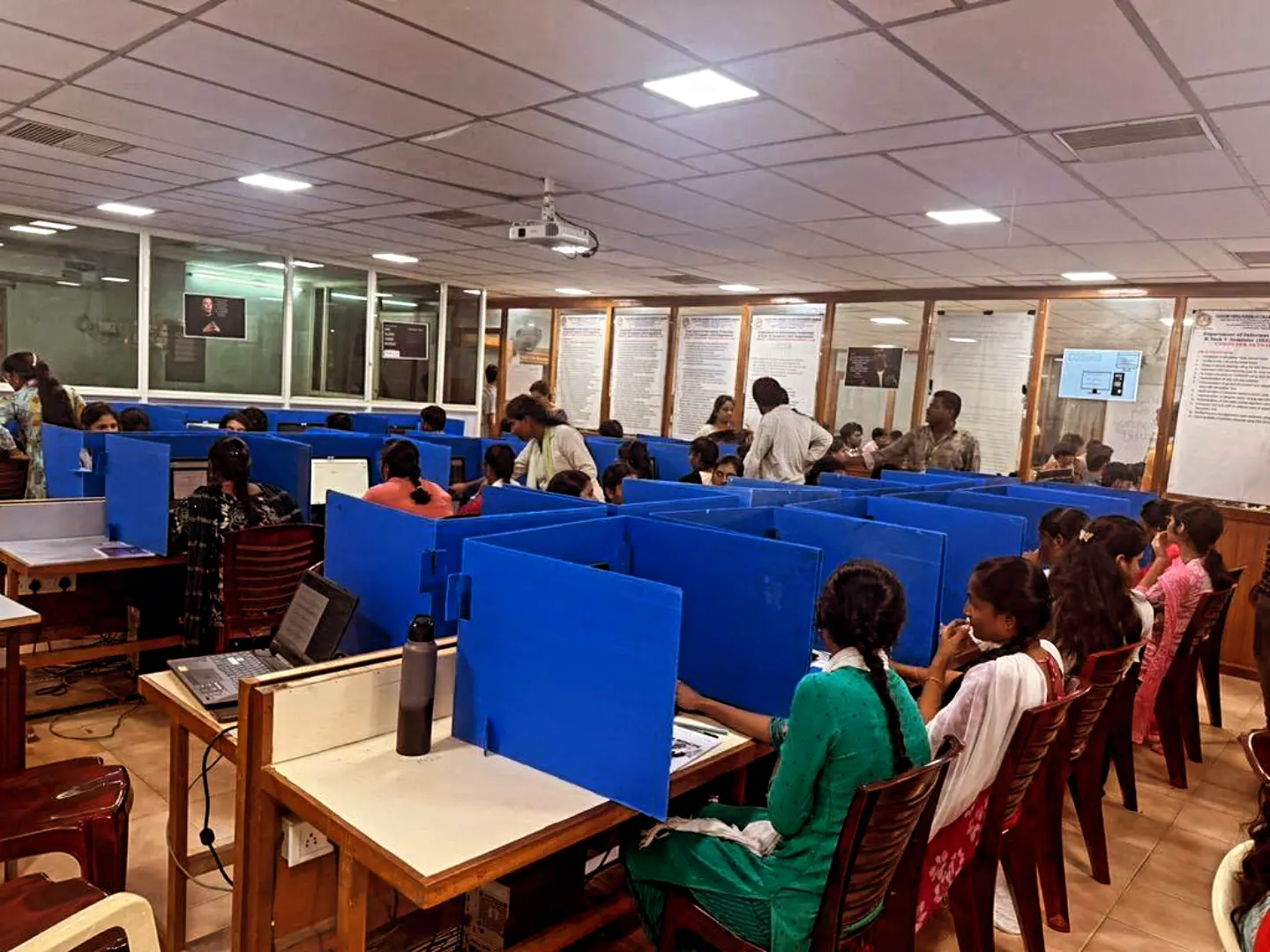
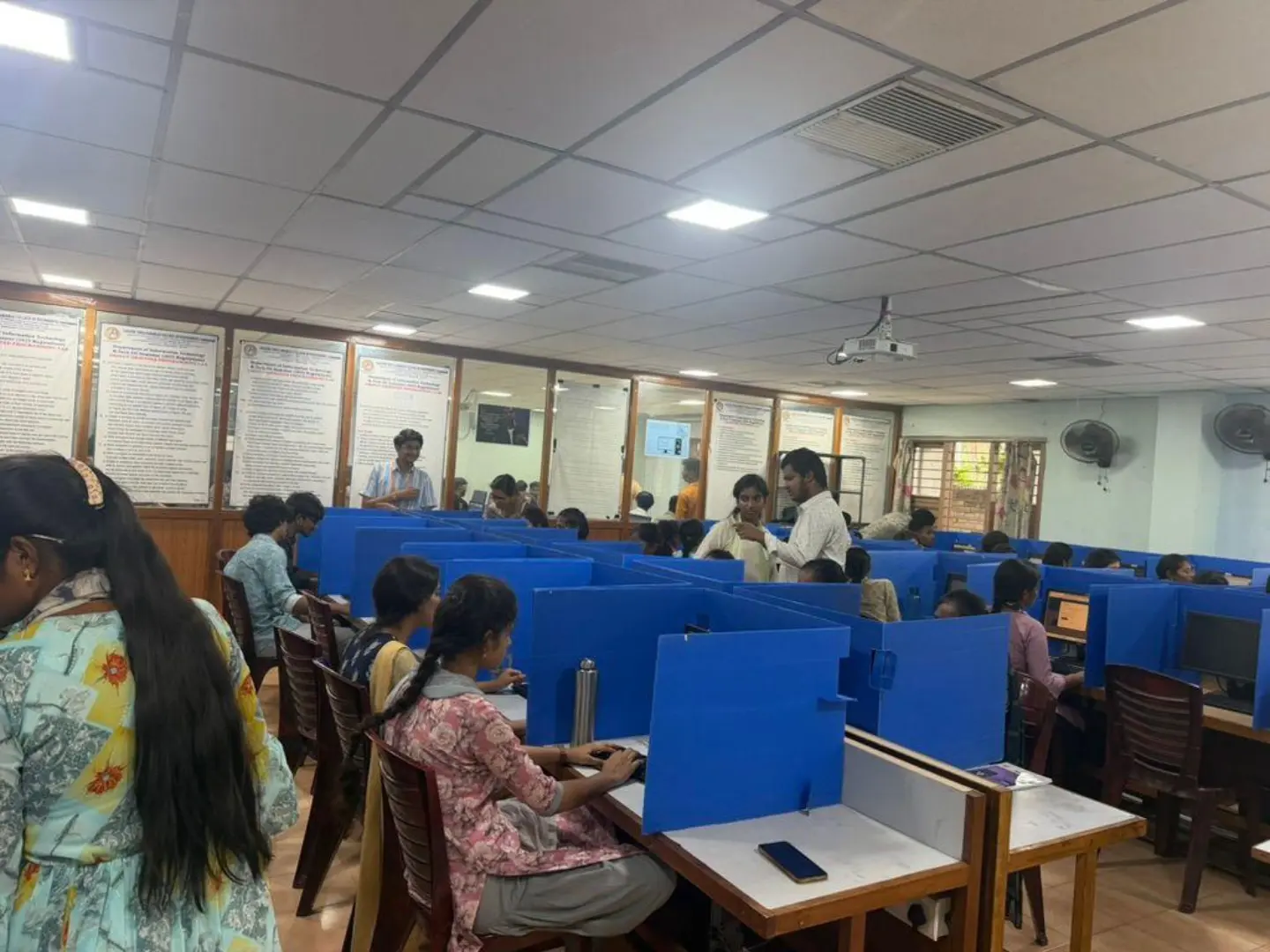
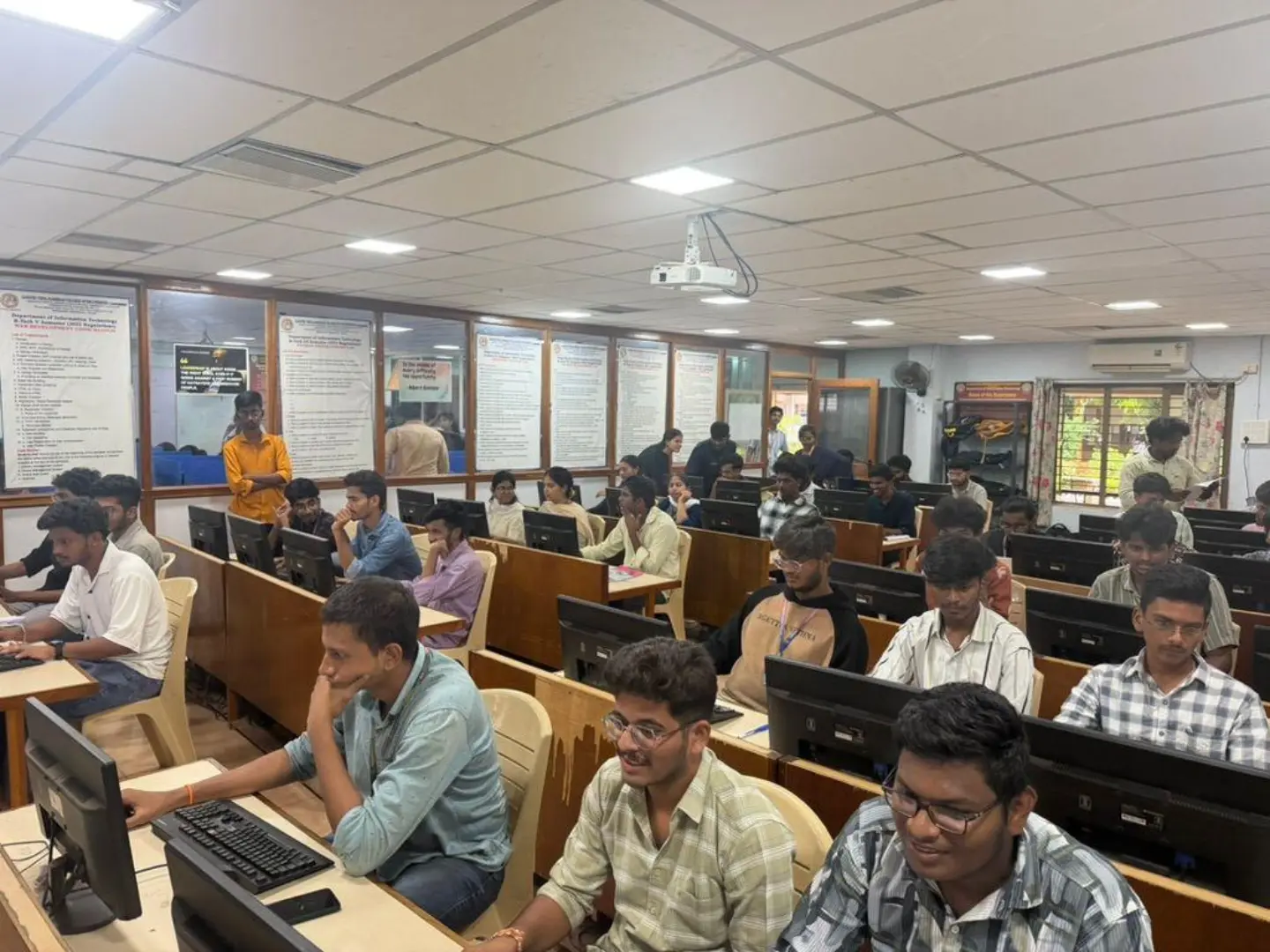
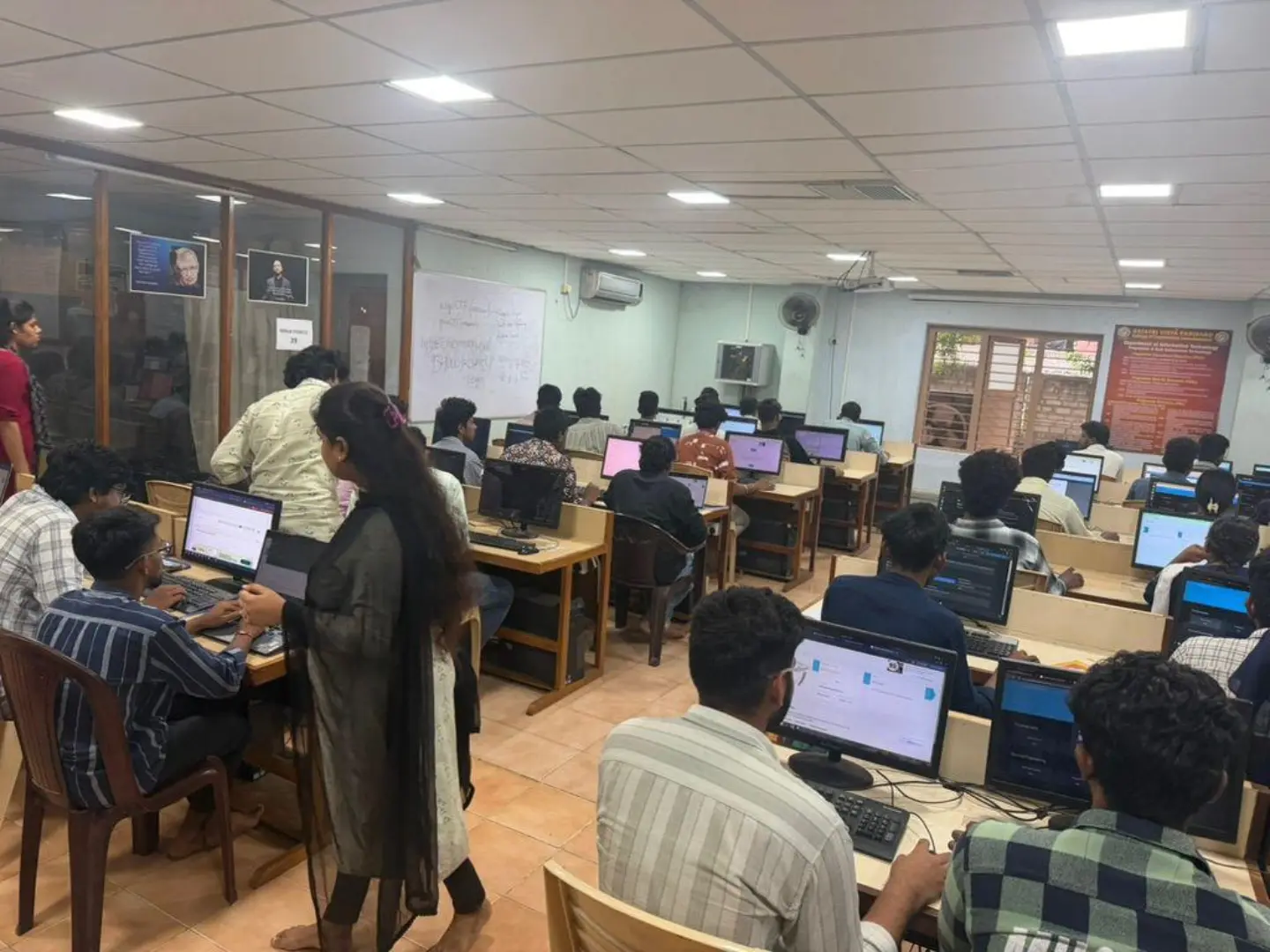
The competition was conducted in offline mode using the computers available in the designated
labs. Participants worked individually and were allowed to attempt the available challenges in
any order according to their own strategy.
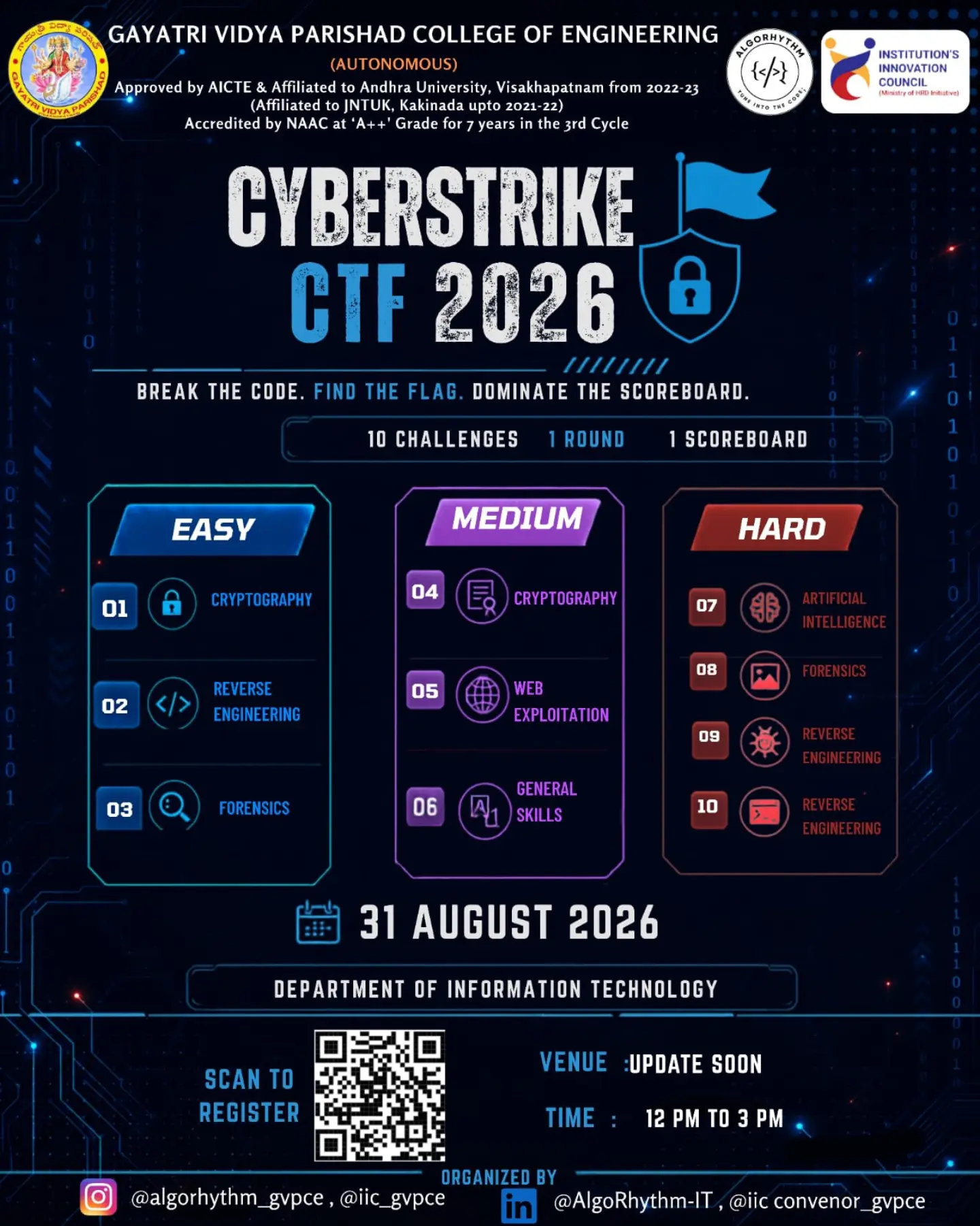
The official competition consisted of 10 cybersecurity challenges divided into three difficulty
levels: Easy, Medium, and Hard. Each challenge was worth 100 points, with the maximum
possible score being 1000 points before any hint deductions.
EASY LEVEL
• Challenge 1 – Cryptography
• Challenge 2 – Reverse Engineering
• Challenge 3 – Digital Forensics
MEDIUM LEVEL
• Challenge 4 – Cryptography
• Challenge 5 – Web Exploitation
• Challenge 6 – General Skills
HARD LEVEL
• Challenge 7 – Artificial Intelligence
• Challenge 8 – Digital Forensics
• Challenge 9 – Reverse Engineering
• Challenge 10 – Reverse Engineering
The live cyberstrike ctf dashboard and leaderboard were used throughout the competition to
track participant scores and rankings. Participants who successfully solved a challenge
submitted the corresponding flag through the platform and received points based on successful
completion.
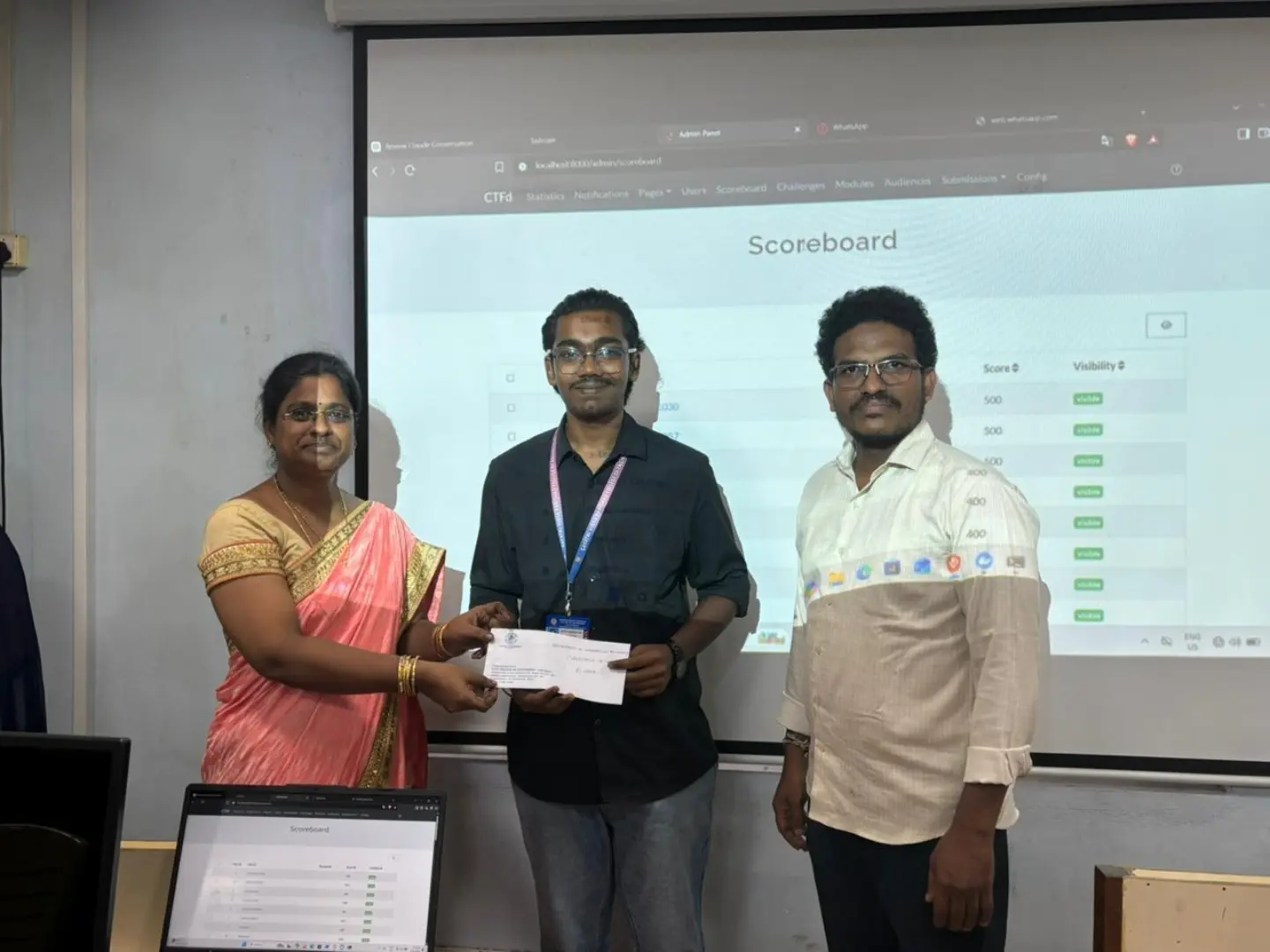
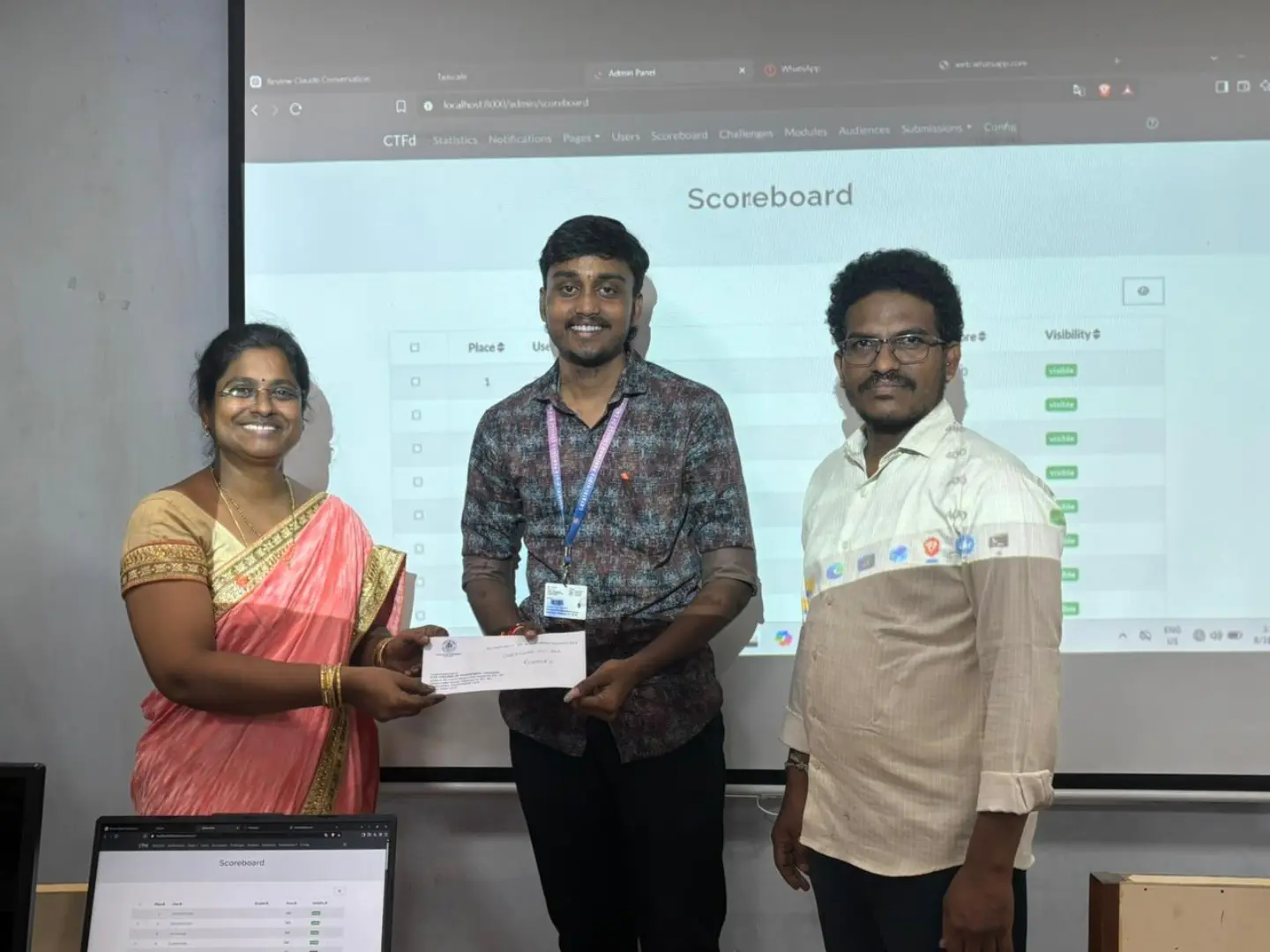
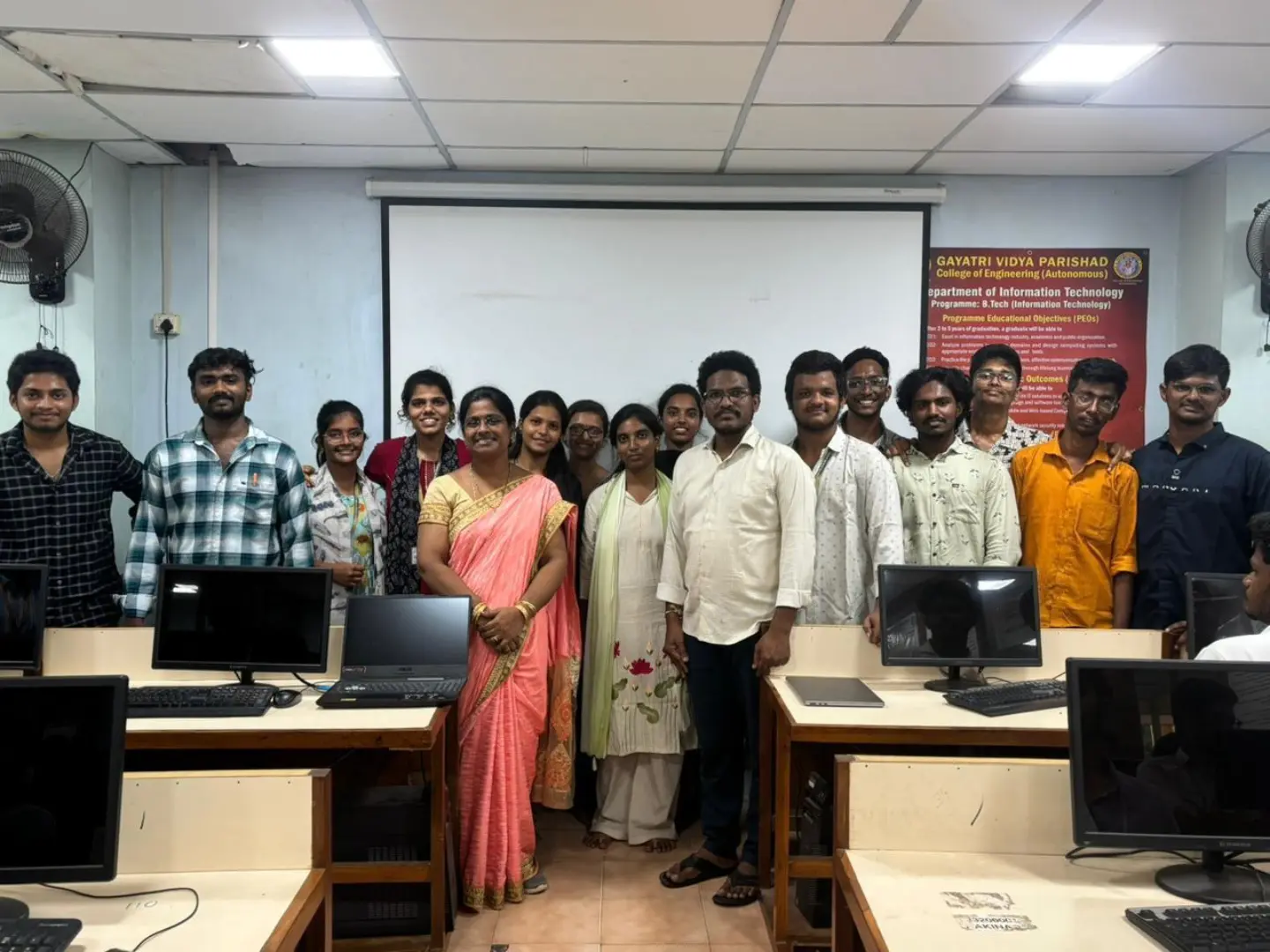
The event concluded with the review of the final leaderboard, following which the Top 3
participants were identified based on their overall performance.
Each challenge carried 100 points, irrespective of its difficulty level. Participants were allowed
to attempt the challenges in any order and could move between challenges throughout the
competition.
The total maximum score across all 10 challenges was 1000 points before any deductions
resulting from hint usage.
EVALUATION & RESULTS -
Evaluation Criteria:
• Participants were evaluated based on the successful completion of cybersecurity challenges.
• Each correctly solved challenge was awarded 100 points.
• Wrong flag submissions did not carry any penalty.
• Participants could use hints when required, with every hint usage resulting in a deduction of
10 points.
• The cyberstrike ctf leaderboard continuously tracked the scores and rankings of participants.
• The participant with the highest total score received the higher rank.
• In the case of a tie, submission timestamps were considered.
• The participant who achieved the score earlier was given the higher ranking.
Results:
• The final rankings were determined through the cyberstrike ctf leaderboard.
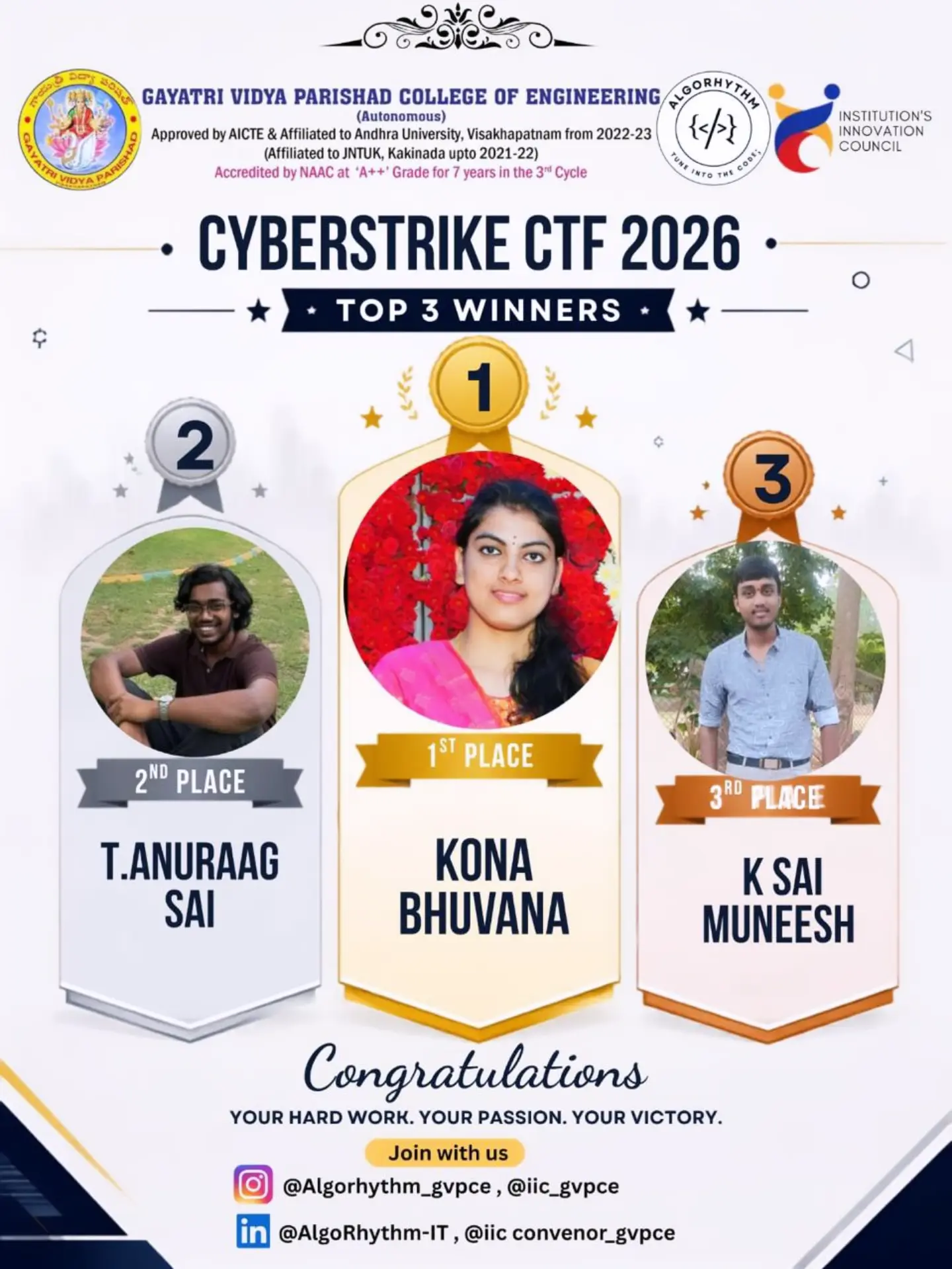
• The Top 3 participants with the highest overall performance were declared winners.
• Winners were selected based on their total scores and submission timestamps in the case of
equal scores.
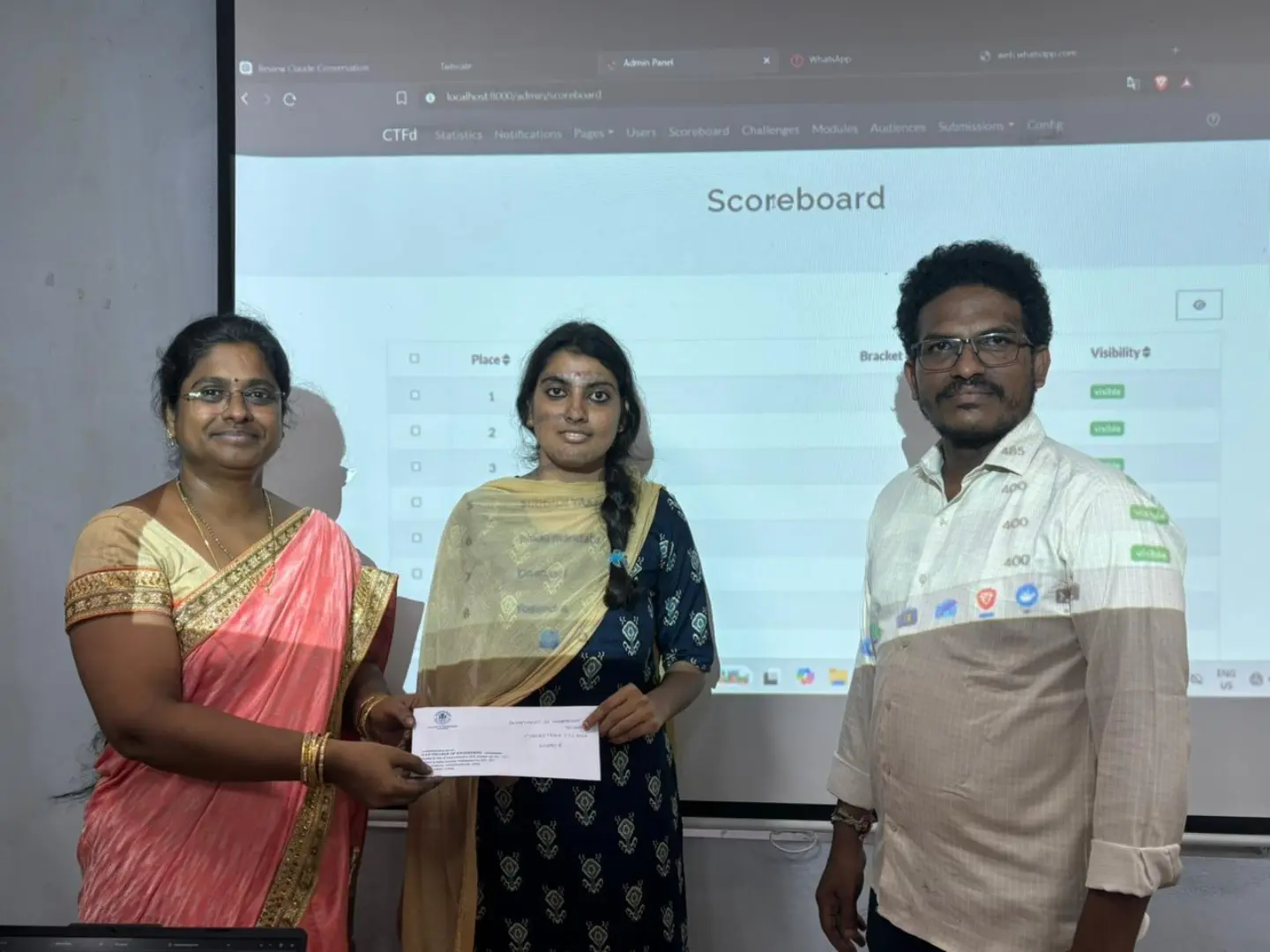
• The winners were recognized with cash prizes and winner certificates.
• All participants who took part in the event received participation certificates.
OUTCOMES OF THE EVENT -
• Participants gained practical exposure to cybersecurity through hands-on Capture The Flag
challenges.
• The event improved students' problem-solving, logical reasoning, and analytical thinking
abilities.
• Participants gained experience in important cybersecurity domains such as Cryptography,
Digital Forensics, Reverse Engineering, Web Exploitation, General Skills, and Artificial
Intelligence.
• Students gained exposure to a practical cybersecurity competition environment using the
cyberstrike ctf platform.
• The live leaderboard encouraged participants to improve their performance and develop
effective challenge-solving strategies.
• Participants developed confidence in analyzing technical problems independently.
• The event encouraged students from different academic branches to explore cybersecurity
and related technical fields.
• Participants gained a better understanding of practical, challenge-based learning in
cybersecurity.
• The competition promoted independent learning, experimentation, and the use of legitimate
cybersecurity tools for solving challenges.
FEEDBACK & REVIEWS -
• Participants found the Capture The Flag format engaging and different from conventional
technical competitions.
• The practical challenges provided students with an opportunity to apply their technical
knowledge in a competitive environment.
• The inclusion of challenges from multiple cybersecurity domains made the event interesting
and diverse.
• The cyberstrike ctf platform provided participants with a structured environment for accessing
challenges, submitting flags, tracking scores, and viewing rankings.
• The live leaderboard increased participant engagement and encouraged healthy competition.
• The hint system provided additional guidance when required while maintaining the
competitive nature of the event through score deductions.
• Overall, the event encouraged students to explore cybersecurity concepts with greater interest
and confidence.
CONCLUSION -
CYBERSTRIKE CTF 2026 was a practical and engaging technical event that provided students
with an opportunity to experience cybersecurity through challenge-based problem-solving. The
event enabled participants to explore multiple domains, including Cryptography, Reverse
Engineering, Digital Forensics, Web Exploitation, General Skills, and Artificial Intelligence.
The Capture The Flag format encouraged participants to think critically, analyze technical
challenges, and apply their knowledge in practical situations. The use of the cyberstrike ctf
platform, live leaderboard, structured scoring system, and hint-based assistance created an
interactive and competitive learning environment.
Through individual participation and hands-on challenges, the event promoted independent
learning, logical thinking, technical analysis, and problem-solving skills. Overall,
CYBERSTRIKE CTF 2026 successfully achieved its objective of introducing students to
practical cybersecurity concepts while providing an engaging platform to test and improve their
technical abilities.
One Day. One Mission. Capture the Flag.
ACKNOWLEDGEMENTS -
The AlgoRhythm Club & Institution’s Innovation Council (IIC), Department of Information
Technology, Gayatri Vidya Parishad College Of Engineering expresses its sincere gratitude to
the Head of the Department, faculty mentors, organizing team, and all those who contributed
to the successful organization of CYBERSTRIKE CTF 2026.
We extend our appreciation to everyone involved in designing, organizing, and conducting the
cybersecurity challenges and ensuring the smooth execution of the event.
We also sincerely thank all the participants for their enthusiastic involvement, dedication, and
competitive spirit. Their active participation and willingness to explore practical cybersecurity
challenges contributed significantly to the success of CYBERSTRIKE CTF 2026.
The support and encouragement received throughout the event helped make CYBERSTRIKE
CTF 2026 a valuable, engaging, and memorable learning experience for everyone involved.
VISUAL_LOGS //
Gallery
METADATA
INITIALIZATION_DATE
MON, 31 AUG, 2026
TERMINATION_DATE
MON, 31 AUG, 2026