
EXECUTION_DETAILS //
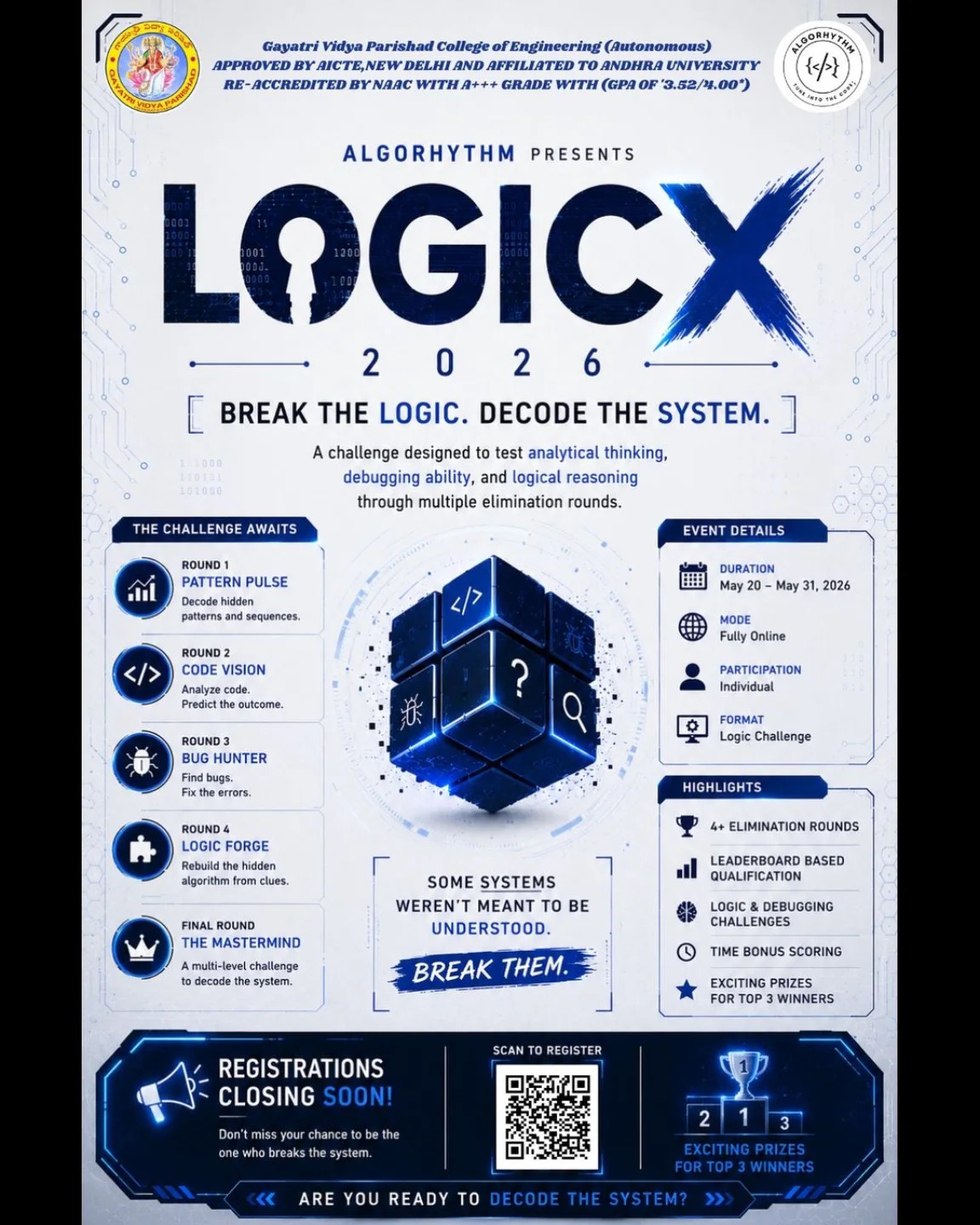
OBJECTIVE OF THE EVENT -
The primary objectives of conducting LOGICX 2026 were:
• To enhance participants' logical reasoning and analytical thinking through structured
technical challenges.
• To improve debugging skills by identifying and fixing programming errors.
• To strengthen problem-solving abilities using pattern recognition and algorithmic thinking.
• To encourage students to apply computational thinking in solving real-world logical
problems.
• To develop time management and decision-making skills through elimination-based
competitive rounds.
• To promote independent learning and technical excellence among students.
• To bridge the gap between academic knowledge and industry expectations by providing
practical logic-based challenges.
ABOUT UI2API & ITS ACADEMIC RELEVANCE -
UI2API 2026 was designed to bridge the gap between academic knowledge and real-world
software development. The challenge required participants to integrate frontend interfaces
with backend services by implementing APIs, database connectivity, authentication
mechanisms, and real-time data synchronization. Through this approach, students gained
practical experience in applying concepts learned in subjects such as Web Technologies,
Database Management Systems, Software Engineering, and Computer Networks. The event
highlighted the importance of software architecture, code organization, security, and
maintainability in modern application development. It also introduced students to
professional development workflows involving Git and GitHub. As a result, participants
developed both technical knowledge and industry-relevant engineering skills.
EVENT PROCEEDINGS –
The event began with a welcome address by the organizing team, introducing
participants to the objectives, rules, and evaluation process of LOGICX 2026. Students
were briefed about the elimination rounds, scoring methodology, and submission
guidelines. The event was conducted successfully in online mode with enthusiastic
participation.
Round 1 – Pattern Pulse
• Participants decoded hidden patterns and number sequences.
• The round tested logical reasoning and analytical thinking.
• Qualified participants advanced to the next stage.
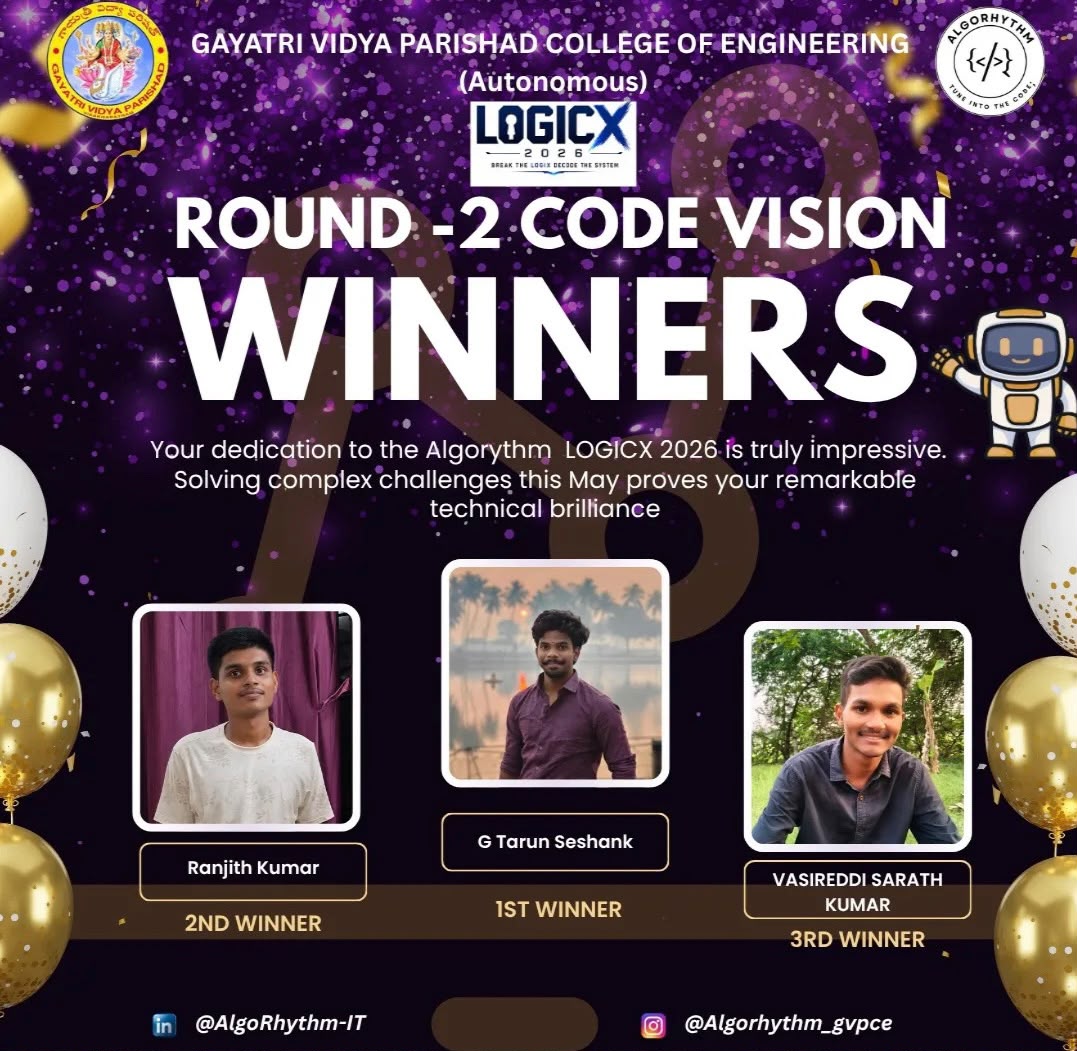
Round 2 – Code Vision
• Participants analyzed programming code snippets.
• They predicted outputs, identified logical flow, and solved code-based reasoning
questions.
• The best-performing participants progressed to the next round.
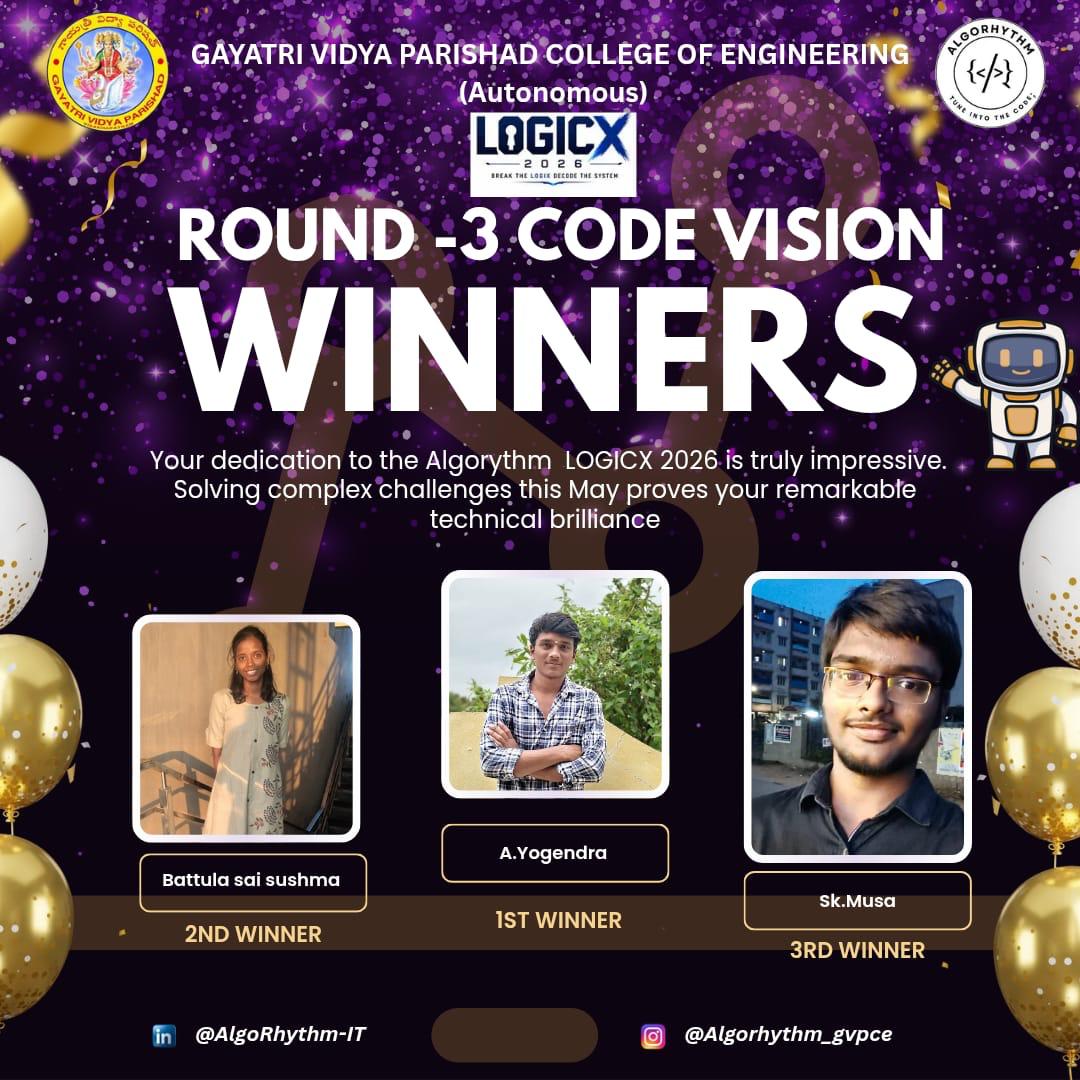
Round 3 – Bug Hunter
• Participants identified bugs in given programs.
• They corrected syntax, logical, and runtime errors within the allotted time.
• Shortlisted participants qualified for the next round.
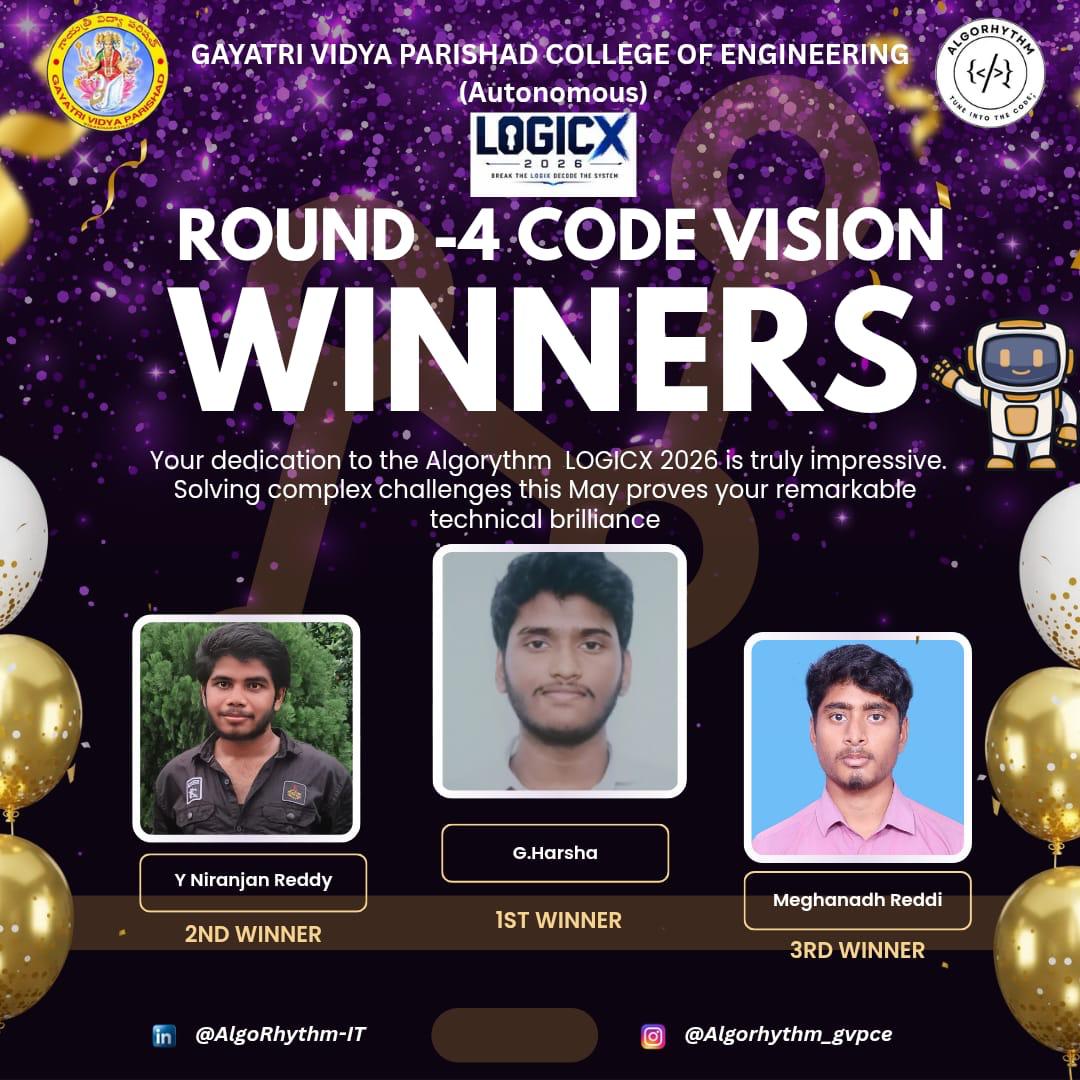
Round 4 – Logic Forge
• Participants reconstructed hidden algorithms using given clues.
• The challenge tested algorithmic thinking and systematic problem-solving.
• The highest-scoring participants advanced to the final round.
Final Round – The Mastermind
• Finalists solved a multi-level logical challenge involving decoding complex
systems.
• The round evaluated overall analytical ability, debugging skills, accuracy, and time
efficiency.
• Winners were determined based on cumulative performance and leaderboard
rankings.
EVALUATION & RESULTS -
Evaluation Criteria
• Logical reasoning and analytical thinking.
• Pattern recognition and sequence analysis.
• Code understanding and output prediction.
• Debugging accuracy and error resolution.
• Algorithm reconstruction and problem-solving approach.
• Time management and overall leaderboard performance.
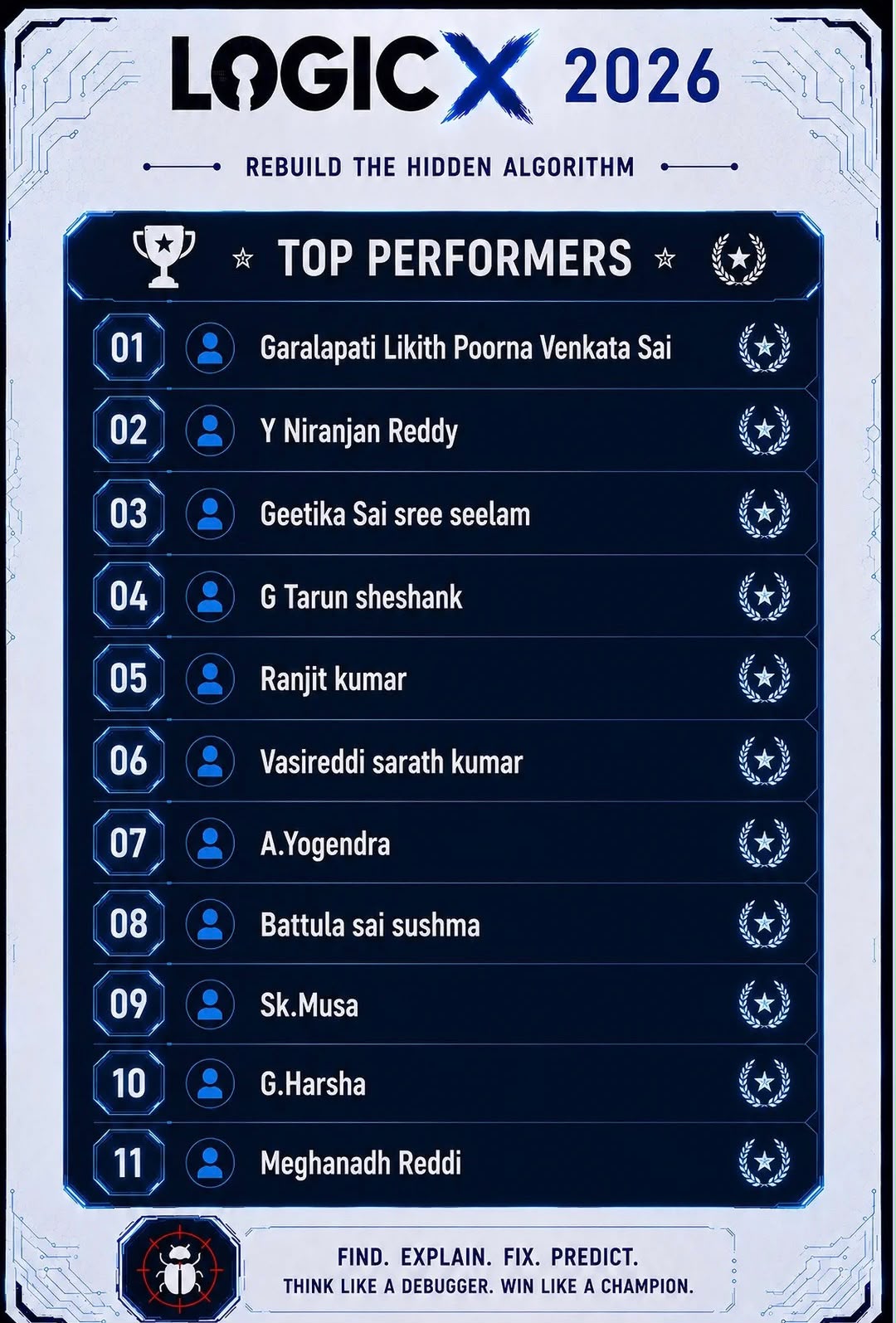
Results
• Participants successfully completed multiple elimination rounds.
• The top-performing participants qualified through each stage based on their
leaderboard scores.
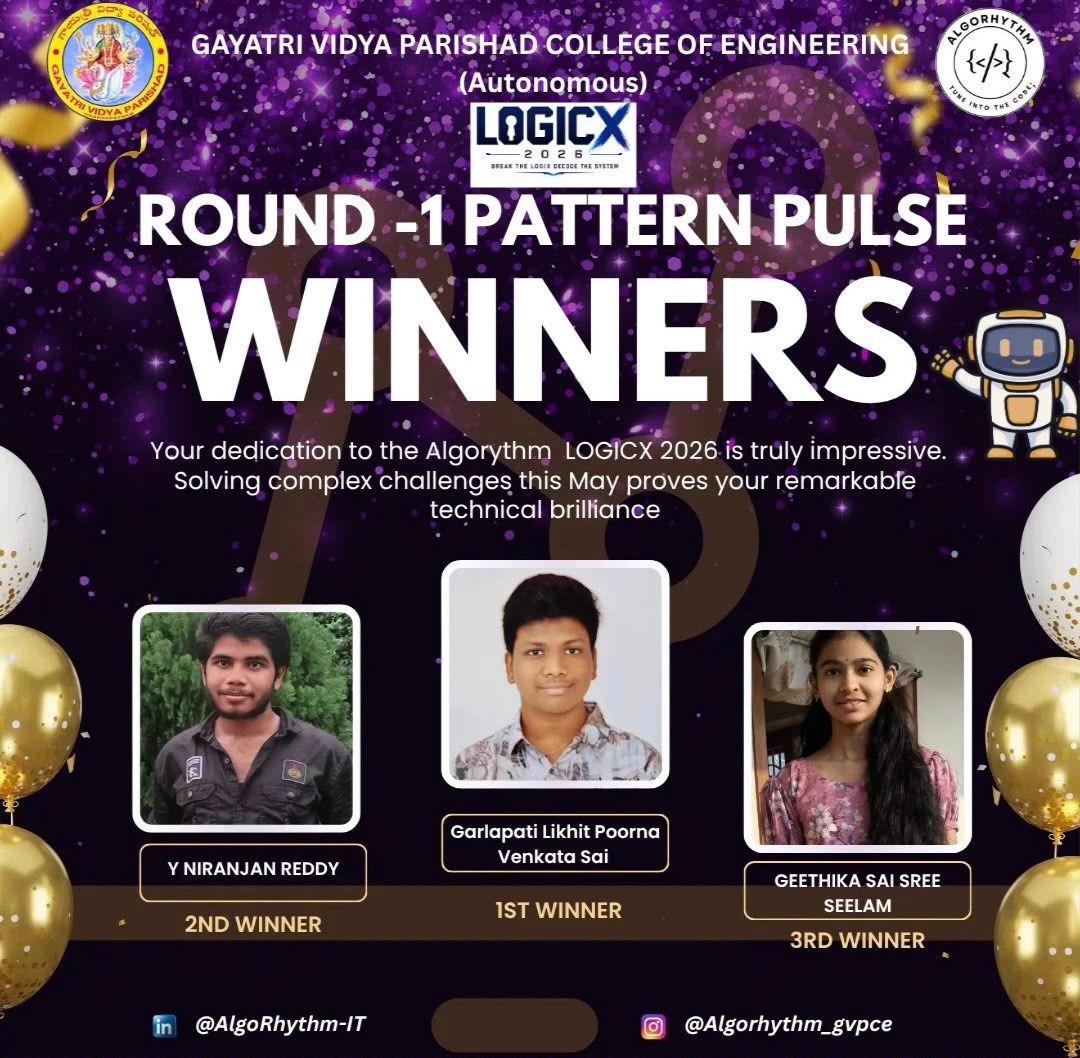
• The Top 3 winners were selected based on their overall performance across all rounds.
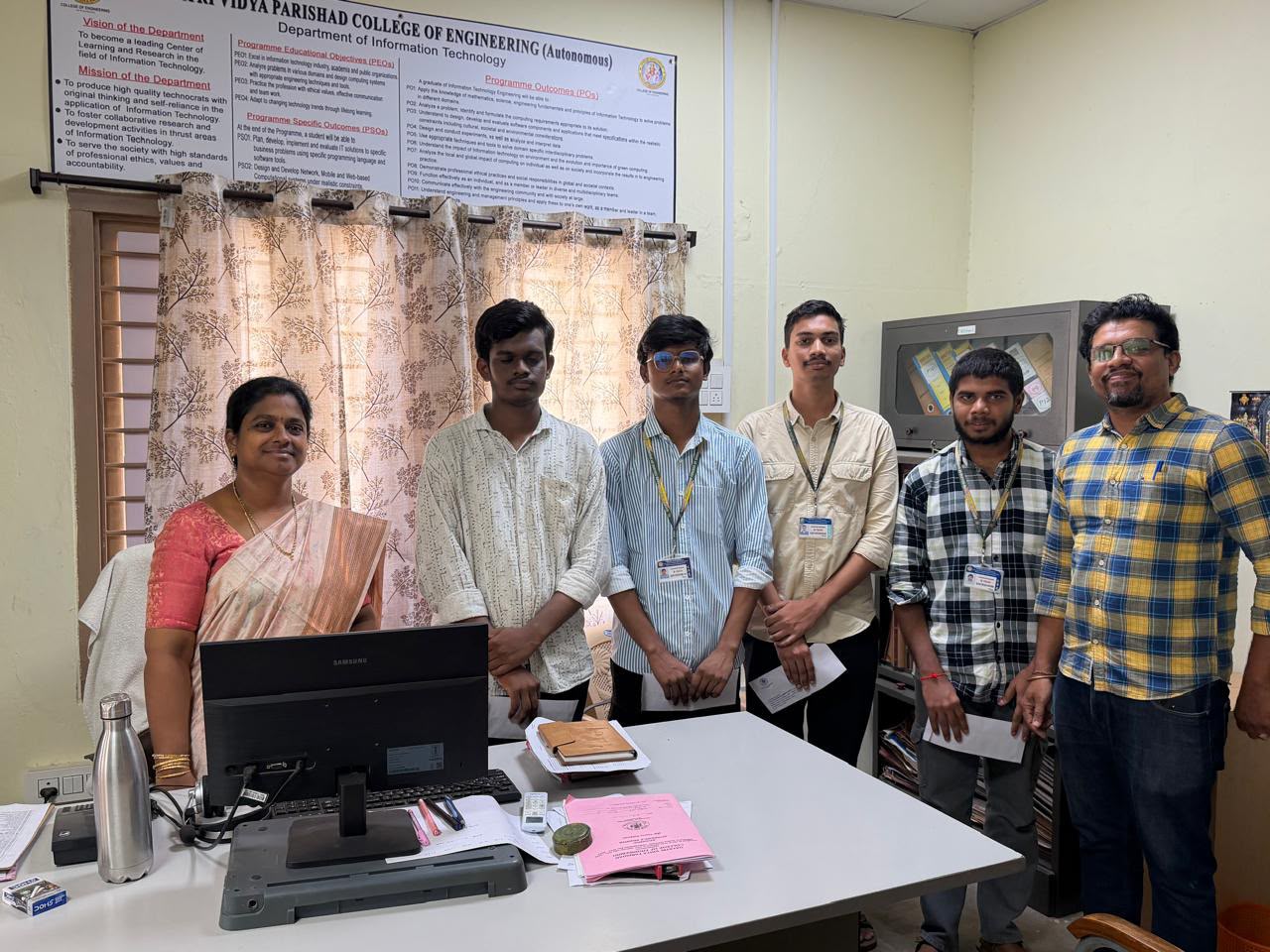
• Winners received certificates and prizes in recognition of their outstanding
achievements
VISUAL_LOGS //
Gallery

METADATA
INITIALIZATION_DATE
TUE, 19 MAY, 2026
TERMINATION_DATE
SAT, 30 MAY, 2026